Picture yourself stepping onto sugar‑white sand at sunrise, coffee in hand, while emerald water glows in the early light. If that image keeps calling you, you’re not alone. Many people wonder what life actually feels like beyond vacation mode in Miramar Beach. In this guide, you’ll get a clear look at daily rhythms, seasonal patterns, amenities, housing types, rentals, and practical costs so you can decide if this beach town fits your life. Let’s dive in.
Miramar Beach at a glance
Miramar Beach sits in Walton County along U.S. 98 between Destin and the Sandestin resort area. The community blends year‑round residents, retirees, remote workers, and a strong seasonal visitor flow. You get easy beach access, resort‑level amenities nearby, and a laid‑back coastal pace. Daily life feels beach‑centric, with routines shaped by the water and the seasons.
Morning rhythms
Most days start early here. You might walk the beach at sunrise, look for shells, or cast a line from shore. Public beach access points and boardwalks make it simple to reach the sand without resort fees. Afterward, grab breakfast at a local café or stock up on groceries at larger anchors like Publix.
If you work remotely, you’ll find many neighbors do too. Home offices are common, and you can explore co‑working options in nearby Destin or Sandestin. Mobile coverage is generally solid, but always verify broadband options for a specific property.
Midday play and errands
Water is the main attraction. You can swim, paddleboard, or book water sports and boat charters out of nearby Destin. Sandestin offers golf, bike paths, and resort amenities for members and guests. If you prefer air‑conditioned afternoons, Silver Sands Premium Outlets provides a major retail hub, with more shopping and dining at Grand Boulevard and Baytowne Wharf close by.
Seafood and beachside fare are part of everyday life. Expect casual spots with fresh Gulf menus and seasonal hours that shift with visitor traffic. In summer, lunch runs and errands take longer, so plan ahead during peak times.
Evenings and weekends
Sunsets are a daily ritual. Many locals watch the sky from the beach, then opt for low‑key dinners. When you want more action, you can head to Destin Harbor or Baytowne Wharf for live music and marina‑side nightlife. In the offseason, evenings feel quieter, and some restaurants reduce hours.
Weekends follow the season. Warm months are lively, with festivals and extended hours. Spring and fall bring milder weather and lighter crowds, perfect for biking trails, golf, or long beach walks.
Seasons to expect
- Summer: Expect the most crowds, heavy traffic on U.S. 98, and tight parking at popular beach accesses. Early morning and later evening beach time helps avoid peak congestion.
- Spring and fall: Pleasant weather with fewer crowds. These shoulder seasons host events and are favorites for locals and returning visitors.
- Winter: Calmer, with snowbirds and shorter business hours in some tourist spots. You’ll enjoy quieter beaches and a more local feel.
Getting around
U.S. 98 is the main coastal corridor, offering easy access but seasonal congestion. Small commercial areas are moderately walkable, though most trips are short drives. For travel, the nearest commercial airport is Destin–Fort Walton Beach Airport (VPS). Pensacola and Panama City airports are farther, but also serve the region.
Essentials and services
Healthcare includes local clinics, urgent care, and medical offices, with larger hospitals and specialist care in nearby towns like Destin or Fort Walton Beach. Schools belong to the Walton County School District. Always confirm current school boundaries and program details for a specific address.
Utilities vary by property. Some condominiums and resort settings include services through HOAs, while single‑family homes may have separate providers. Broadband is generally available along populated corridors, but confirm speeds and providers at the exact address.
Homes and costs
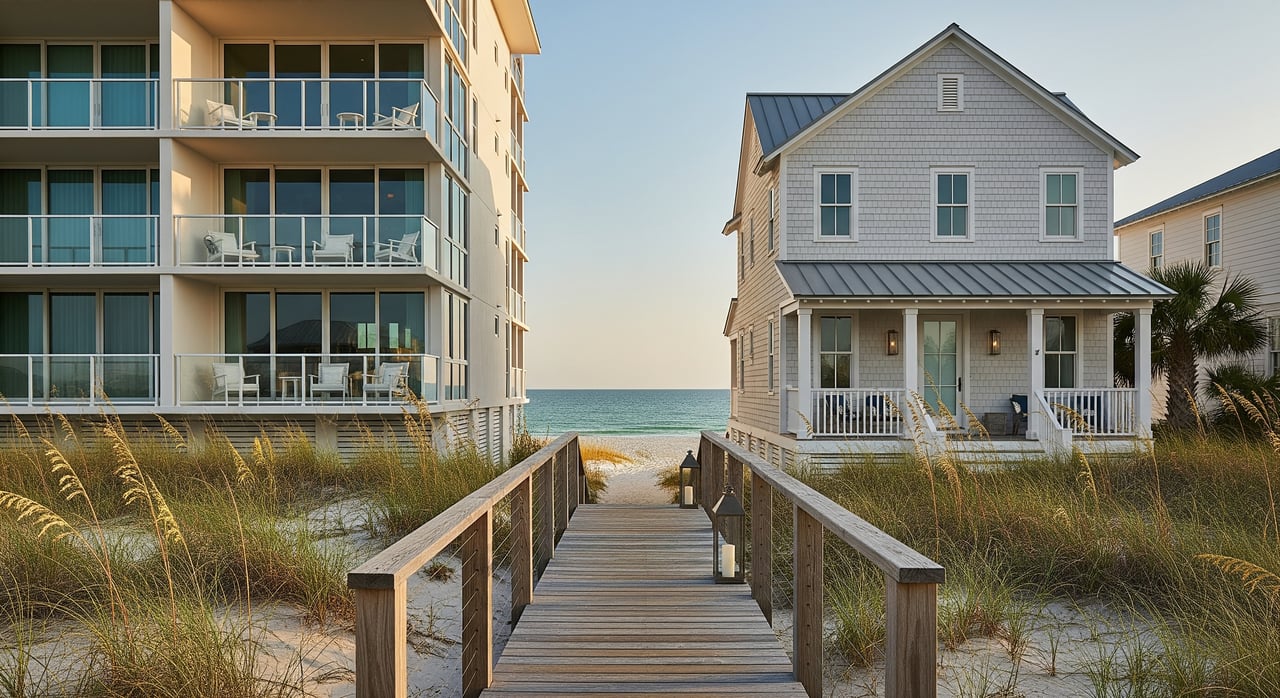
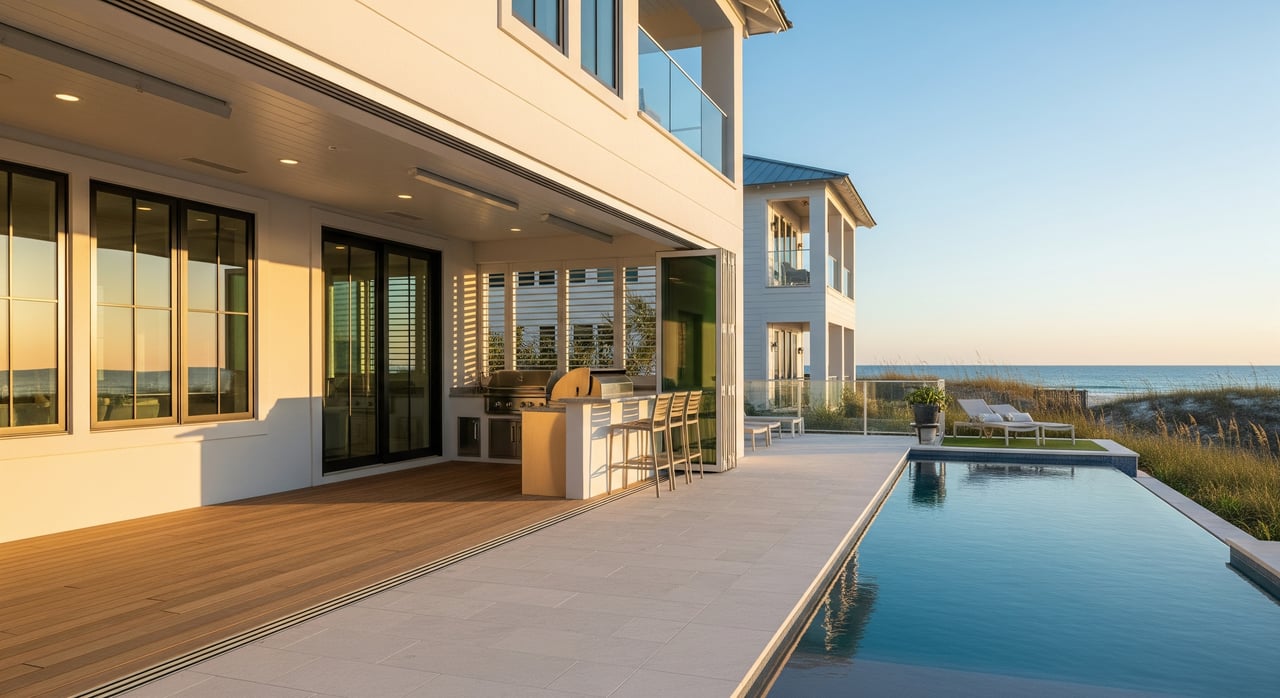
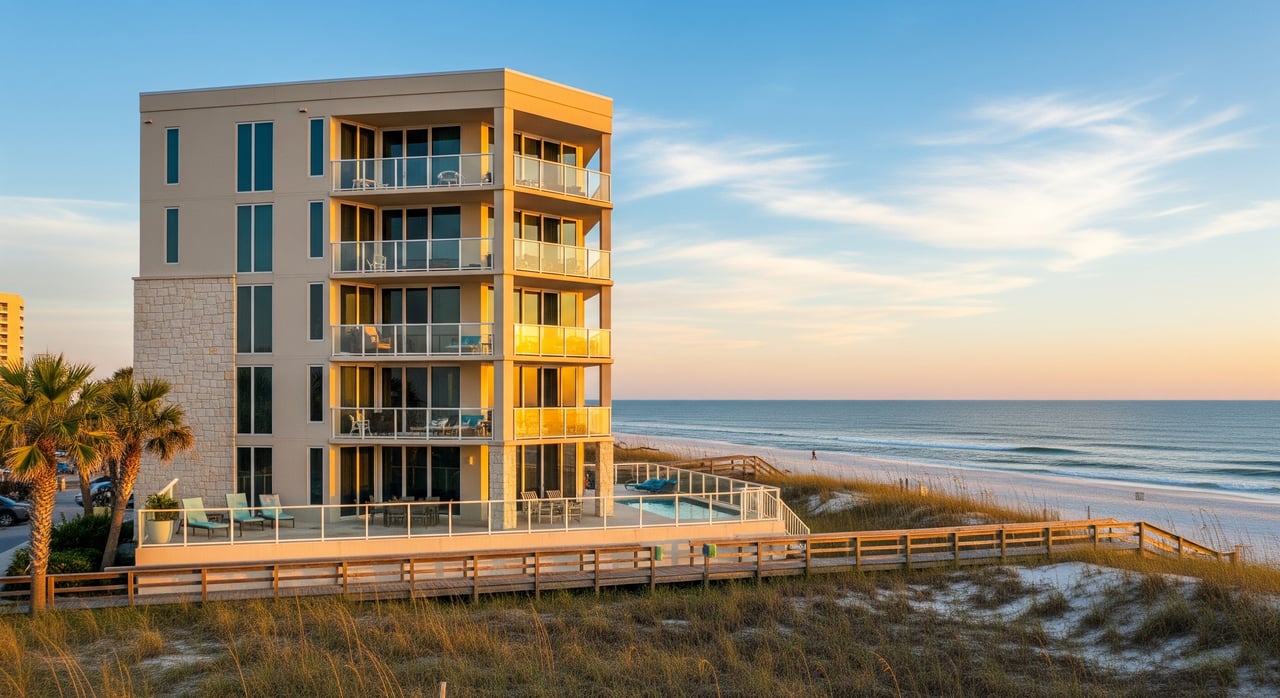
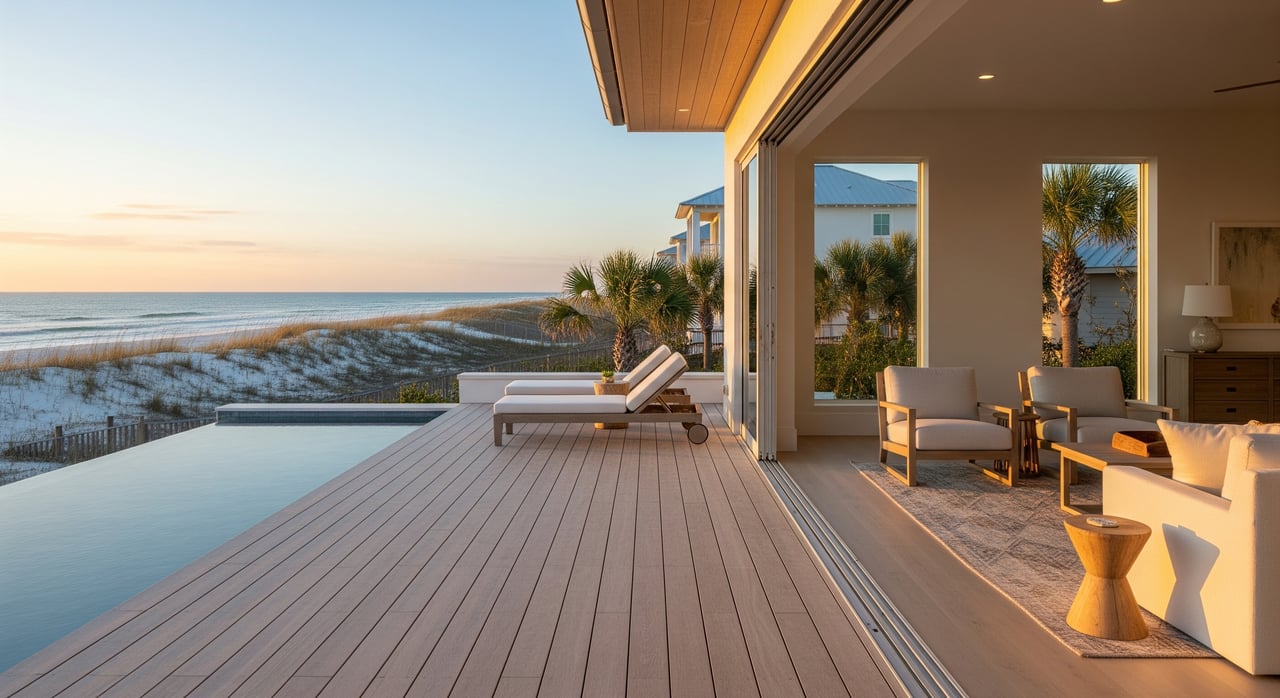
Miramar Beach offers a mix: high‑rise and mid‑rise condos, beachfront cottages, single‑family homes, and planned communities. Many properties serve as second homes or short‑term rentals, which can influence pricing and availability. Coastal homes typically command a premium compared with inland Walton County options.
Budget for more than the purchase price. Factor in property taxes, HOA fees where applicable, utilities, and maintenance. Beachfront and coastal homes face salt corrosion, higher HVAC usage, and roof upkeep. Investors should also plan for cleaning, turnover, and potential furnishing costs for rental‑ready units.
Short‑term rentals
Vacation rentals are common and important to the local economy. If you plan to rent your property, confirm Walton County ordinances, registration requirements, and tourist development taxes. Review HOA rules and any development‑level policies that may limit rental terms or occupancy. This due diligence is essential before you buy.
Weather and insurance
Hurricane season runs from June 1 to November 30. You’ll want a plan for storm prep, evacuation routes, and off‑season readiness. Many coastal parcels fall within FEMA‑mapped flood zones, and lenders often require flood insurance.
Insurance is a significant part of ownership costs. Policies may include wind, flood, and wind‑storm coverage. Rates depend on distance to the coast, elevation, construction type, and mitigation features. Investigate a property’s flood zone, elevation certificate, and historical surge or flood data during your evaluation.
Is it right for you?
Miramar Beach fits you if you want daily beach access, a relaxed coastal pace, and proximity to resort‑style amenities. It’s a strong option for lifestyle buyers who love morning walks, afternoon water time, and sunset dinners. It also works for remote workers and second‑home owners who can embrace seasonal rhythms. If you plan to invest, the area’s rental demand is established, but you must confirm rules, insurance, and true operating costs.
If Miramar Beach feels like your next chapter, we can help you explore neighborhoods, compare condo vs. single‑family options, and understand rental and insurance considerations. Reach out to Ash Caswell for local guidance rooted in sixth‑generation Walton County experience and a modern, MLS‑synced search.
FAQs
What is daily life like for full‑time residents in Miramar Beach?
- Expect beach‑centric routines with early walks, flexible midday schedules, and low‑key evenings, plus seasonal changes that bring summer crowds and quieter winters.
How crowded is Miramar Beach in summer, and how can I avoid traffic?
- Summer is the busiest season, with heavy U.S. 98 congestion and limited beach parking; go early or later in the day and plan errands outside peak hours.
Which airports serve Miramar Beach for regular travel?
- Destin–Fort Walton Beach Airport (VPS) is the closest commercial option, with additional service available from Pensacola and Panama City airports farther away.
How do schools and healthcare work in Miramar Beach?
- Schools are within the Walton County School District, and healthcare includes local clinics with larger hospitals nearby; verify assignments and providers by address.
Can I operate a short‑term rental in Miramar Beach?
- Often yes, but check Walton County rules, registration and tourist taxes, and any HOA or development policies that could limit rental terms and occupancy.
Do I need flood or hurricane insurance for a Miramar Beach home?
- Many coastal properties are in FEMA flood zones and lenders may require flood insurance; plan for wind and storm coverage and confirm costs for the specific property.