Dreaming of a Gulf‑area condo but unsure how the financing works? You are not alone. Condo loans in Fort Walton Beach follow a few extra rules compared to single-family homes, and knowing them early can save you time and money. This guide breaks down loan types, approvals, insurance, documents, and timelines so you can move forward with confidence. Let’s dive in.
Condo loans you can use in Fort Walton Beach
Conventional loans (Fannie Mae and Freddie Mac)
Conventional loans are the most common. Your lender evaluates both you and the condo project. If the building is considered warrantable to Fannie Mae or Freddie Mac, you typically see more options and better pricing.
FHA loans
FHA can allow a down payment as low as 3.5 percent, but the condominium project must be FHA approved unless a limited exception applies. If a building is not already approved, getting it approved can add time.
VA loans
Eligible veterans may qualify for 0 percent down if the condo project meets VA requirements. Not every project is acceptable, so ask your lender to check the VA condo status early.
Portfolio and jumbo options
Local banks, credit unions, and specialty lenders sometimes finance non‑warrantable projects through in‑house programs. These can be more flexible but often come with higher rates or larger down payments. Jumbo loans for higher-priced units can also have stricter condo guidelines.
Why warrantability matters
“Warrantable” means a lender or agency has reviewed and accepted the condo project under its rules. This project-level review protects lenders from risks that affect value and resale.
Lenders commonly review:
- Owner‑occupancy and investor mix
- Single‑entity ownership concentration
- HOA financial health, budget, and reserves
- Insurance coverage and deductibles, including wind and flood
- Pending litigation
- Commercial space and mixed‑use elements
- Project size, type, and developer control
If a project is non‑warrantable, you may face fewer loan options, higher down payments, and rate premiums. Portfolio loans may help, but you should plan for stricter terms.
Coastal insurance and local risk factors
In Fort Walton Beach, wind and flood exposure is a key part of underwriting. If a building is in a FEMA Special Flood Hazard Area, flood insurance is generally required for federally related mortgages. Lenders will review the condo association’s master policy, coverage limits, and deductibles, and may ask for proof of insurability.
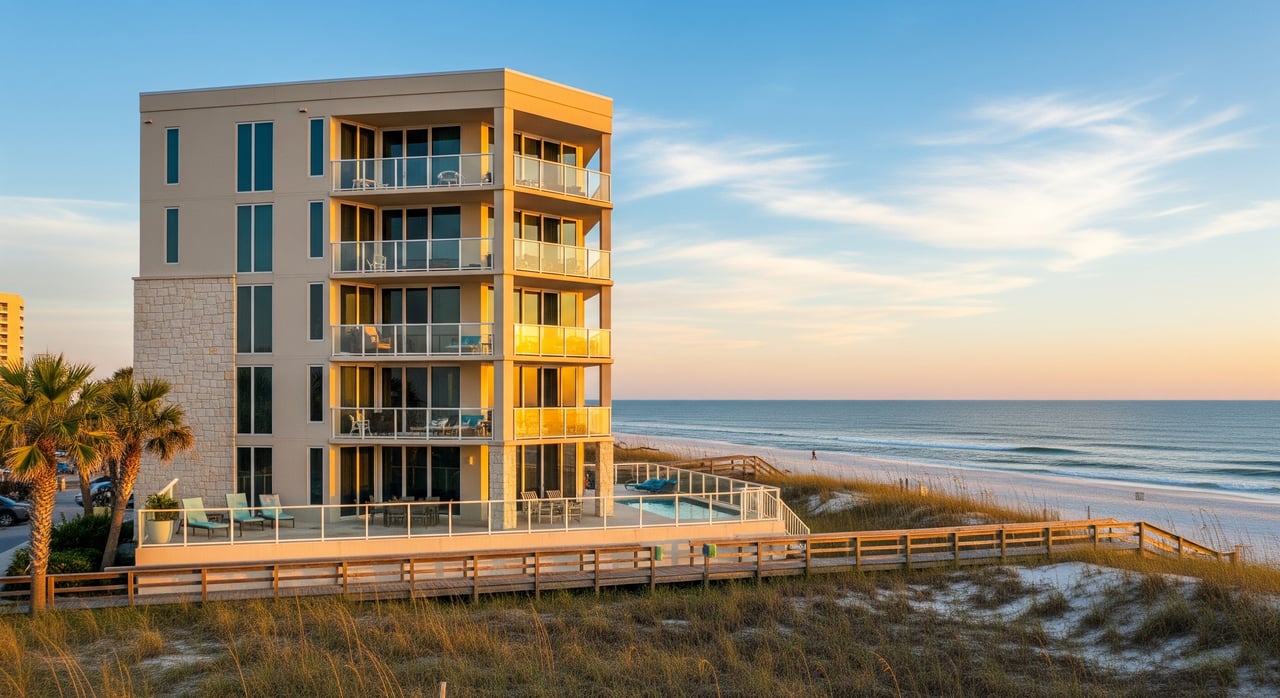
Florida’s environment has evolved since 2021, and older coastal buildings often get extra scrutiny. Expect questions about structural or maintenance history, especially in multi‑story buildings near the water. Insurance availability and premiums also influence monthly costs and qualifying ratios.
Down payments and rates to expect
- FHA: as low as 3.5% on approved projects for eligible buyers.
- VA: 0% down may be possible for qualified veterans if the project meets VA requirements.
- Conventional primary residence: as low as 3–5% on warrantable projects, though many lenders prefer 5% or more.
- Second home or investment: commonly 10–25% or higher.
- Non‑warrantable, jumbo, or portfolio: often 10–25%+ with possible rate premiums.
Rates for condos can be slightly higher than comparable single‑family loans due to project risk. Lender overlays, mortgage insurance for less than 20 percent down, and HOA special assessments can also affect your total monthly cost.
Documents your lender will likely request
Be ready to help your lender collect project information from the HOA or management:
- Current HOA budget and any reserve study
- Master insurance declarations and coverage details
- Declaration, bylaws, and condo plat or plans
- Recent HOA meeting minutes and litigation disclosures
- Unit roster for owner‑occupancy and ownership concentration
- HOA fee schedule and any special assessments
- Completed condo or project questionnaire
Having these early can speed up underwriting and reduce surprises.
Smart questions to ask your lender
- Is this condo project already approved for your programs? If not, what terms are available?
- What condo-related overlays do you apply, such as owner‑occupancy minimums or reserve requirements?
- What are the down payment and credit needs for primary, second home, and investment purchases here?
- Do you offer portfolio financing if the project is non‑warrantable? What rates and minimums apply?
- How do you treat special assessments in qualification?
- What documents do you need from the HOA, and how long does project review usually take?
- How do wind and flood insurance costs affect my debt‑to‑income calculation?
Smart questions to ask the HOA or manager
- Can you provide the current budget, reserve study, and insurance declarations?
- Are there any current or recent special assessments? What are the amounts and purpose?
- Is there any pending litigation involving the association or building?
- What percentage of units are owner‑occupied versus rented? Any large single-entity owners?
- Are there rental restrictions or short‑term rental policies?
- Who manages the association, and are maintenance and reserves up to date?
- Have any structural inspections or engineering reports been completed recently?
If the condo is not initially acceptable
- Ask the seller or HOA for missing documents or clarifications.
- Consider whether FHA or VA approval is possible if those programs fit your needs.
- Explore portfolio lenders familiar with Emerald Coast condos.
- Increase your down payment to meet non‑warrantable terms if needed.
- Model higher rates and insurance costs in your affordability plan.
Timeline: what to expect
- Previously approved project: condo verification can be completed in a few days to a few weeks.
- Projects needing new or updated approval: plan for several weeks or longer, especially for FHA or VA approvals.
A simple action plan for local buyers
- Get pre‑approved early and confirm the lender’s condo overlays.
- Shortlist buildings and ask your agent to request HOA docs upfront.
- Verify flood zone, wind coverage, and deductibles for realistic monthly budgeting.
- Align your loan program and down payment with the project’s warrantability.
- Build timeline flexibility for any added HOA or project review steps.
Buying a condo here can be straightforward when you plan ahead. With the right lender match, early HOA documents, and a clear view of insurance and reserves, you can close on a Fort Walton Beach condo with confidence. If you want help narrowing buildings and coordinating lender questions, connect with Ash Caswell for local guidance tailored to your goals.
FAQs
What does “warrantable” mean for Fort Walton Beach condos?
- It means the condo project meets agency or lender rules, which opens up more loan options and often better pricing.
Can I use an FHA loan on a Fort Walton Beach condo?
- Yes, if the project is FHA approved or meets limited exceptions; otherwise, FHA financing is typically not available.
I’m a veteran. Can I buy with 0 percent down?
- Possibly, if you are VA eligible and the condo project meets VA requirements.
How much down payment should I plan for on a condo?
- Warrantable primary residence options can start around 3–5 percent, while second homes, investments, or non‑warrantable projects often require 10–25 percent or more.
Will flood or wind insurance prevent me from qualifying?
- Not automatically, but higher premiums increase your monthly costs and factor into your debt‑to‑income ratio.
What documents slow condo underwriting the most?
- Missing HOA financials, insurance declarations, or unresolved litigation details can delay approval the most.