Thinking about selling your Miramar Beach home and wondering which upgrades actually move the needle? In a coastal market like Walton County, buyers look beyond pretty finishes. They want durability, strong outdoor living, and features that support rental income. In this guide, you’ll learn which projects add value along the Gulf, what they cost, and how to prioritize them before you list. Let’s dive in.
Why salt air changes the equation
Salt spray, humidity, and strong sun punish materials faster near the coast. Paint fades quicker, fasteners corrode, and untreated wood breaks down. Buyers know this and will ask about maintenance history and long-term durability. When you choose materials that resist corrosion and moisture, you reduce upkeep and build confidence with both lifestyle buyers and rental investors.
Materials that hold up near the Gulf
Impact windows and doors
Impact-rated windows and doors are a high-impact upgrade in Miramar Beach. They improve wind resistance, often help with insurance credits when properly documented, and remove the need for shutters. Look for Florida product-approved options and frames suited to coastal exposure, such as vinyl, aluminum-clad, or fiberglass.
- Typical costs: impact windows run about $700 to $1,600 per window installed, depending on size and style. Impact-rated exterior doors are often $1,500 to $4,500 or more installed.
- Buyer appeal: fewer storm prep steps, better protection, and a clean look without shutters.
Decks, railings, and exterior hardware
Decking and railings take a beating near the beach. Capped composite or 100% PVC decking outperforms traditional wood in salt, sun, and moisture. For railings and hardware, prioritize powder-coated aluminum or 316 stainless steel over basic galvanized.
- Typical costs: composite decking generally runs $30 to $60 per square foot installed. Expect a 10 to 40 percent premium for stainless fasteners and hardware versus standard galvanized.
- Maintenance: plan for routine rinsing and annual checks on fasteners and flashing. Document repairs and upgrades for buyers.
Siding and roofing built for the coast
Fiber-cement siding resists rot, insects, and moisture better than wood near salt spray. Pair it with high-quality PVC trim for long-term performance. For roofing, metal systems with corrosion-resistant coatings or class-4 impact-rated shingles are popular. Proper underlayments and flashings rated for coastal conditions matter just as much as the roof panel itself.
- Typical costs: fiber-cement siding installs around $5 to $12 per square foot. Coated metal roofing often ranges from $8 to $15 per square foot installed.
- Buyer appeal: visible durability, clean lines, and reduced upkeep.
Hardware, fasteners, and finishes
Small details signal quality in coastal homes. Where you can, upgrade critical fasteners and connectors to marine-grade stainless steel. Use high-performance exterior coatings with UV and salt-fog resistance, and plan on more frequent caulking and seal checks compared with inland homes.
- Pro tip: swap out visibly corroded deck screws, gate hardware, and exterior latches with 316 stainless to instantly boost perceived care.
Outdoor living buyers love
Screened porches and covered spaces
Screened porches, lanais, and covered outdoor rooms make life easier along the Gulf. They add usable space, offer insect relief, and show well for rental listings.
- Typical costs: a mid-range screened porch or enclosure often runs $20,000 to $60,000, depending on size and structure.
- Buyer appeal: livable outdoor area that can be enjoyed year-round.
Outdoor kitchens and rinse stations
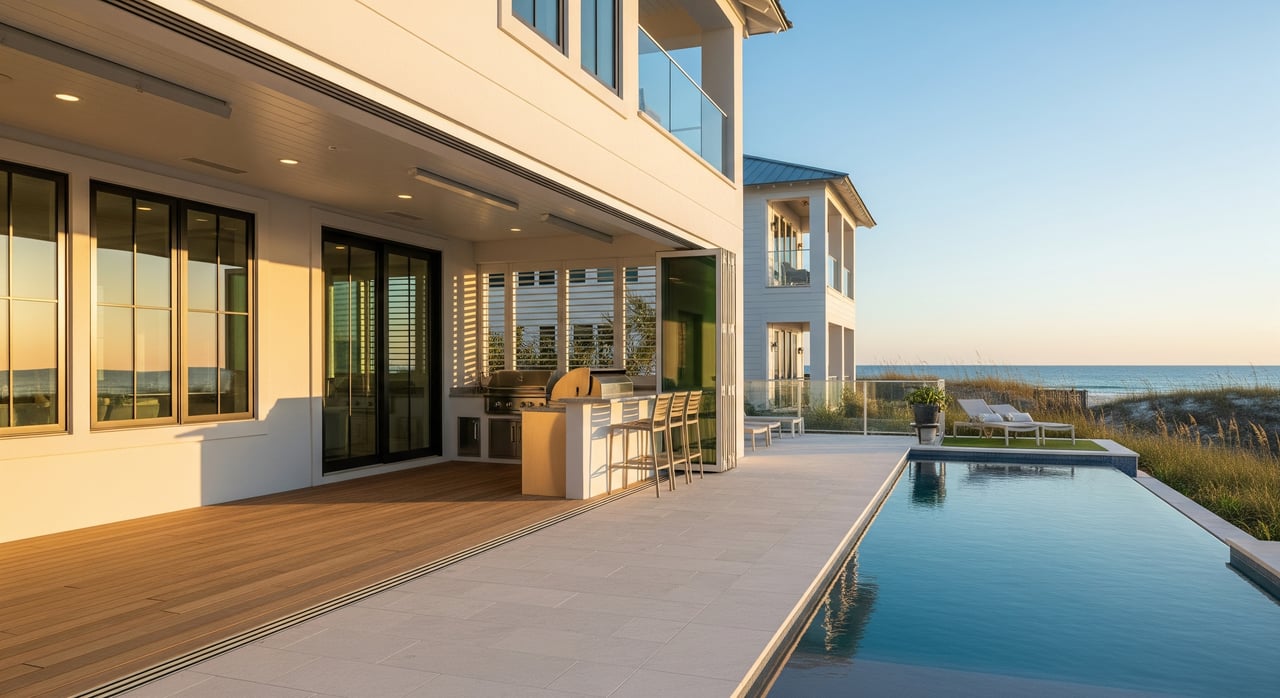
An outdoor kitchen creates a standout entertaining zone and helps justify top-tier rental rates. Even a basic built-in grill with counters can elevate your listing. Pair that with an outdoor shower or rinse station to keep sand outdoors and floors clean.
- Typical costs: basic outdoor kitchens often range from $8,000 to $25,000, with high-end versions starting around $25,000 and going up from there. Outdoor showers and rinse stations typically run $1,000 to $6,000 depending on features.
- Buyer appeal: better guest experience and simple maintenance after beach days.
Dune-friendly landscaping and lighting
Native, salt-tolerant plants reduce upkeep and support dune stability where appropriate. Pavers can perform better than poured concrete in salt conditions when installed with proper bedding and drainage. Keep lighting low-maintenance and corrosion-resistant.
- Typical costs: small native landscaping projects often fall between $1,000 and $10,000, with larger stabilization work costing more if permitting or heavy equipment is needed.
- Compliance: beachfront work may require permits. Always verify before starting.
Rental-friendly upgrades that boost bookings
Durable interiors guests appreciate
Inside, durability is king for short-term rentals. Luxury vinyl plank is water-resistant and easy to maintain. Ceramic tile in wet areas and quartz or solid-surface counters resist staining, humidity, and frequent cleanings.
- Typical costs: LVP flooring is often $3 to $10 per square foot installed. A minor kitchen refresh with new counters, hardware, and paint can run $3,000 to $12,000.
- Buyer appeal: clean, modern finishes that hold up to turnover.
Smart tech and simple operations
High-speed internet and robust Wi-Fi are top guest priorities. Add a mesh system for reliable coverage. Contactless entry with smart locks reduces management hassle and helps rentals run smoothly.
- Typical costs: high-speed Wi-Fi and mesh setups usually range from $300 to $1,200 installed. Smart locks are commonly $200 to $800 per door.
- Buyer appeal: turnkey systems that ease operations and improve reviews.
Storage and laundry for beach life
Provide secure, easy-access storage for beach gear with racks and enclosed bins. A high-capacity, easy-to-service washer and dryer helps turnover teams and renters alike.
- Typical costs: stacked or high-capacity laundry units often cost $1,000 to $3,000 installed.
- Buyer appeal: less wear inside the home and happier guests.
Permit, insurance, and disclosure essentials
Walton County permitting and dunes
Major exterior changes, especially near dunes or the beach, can trigger state and county reviews. Work that affects dune vegetation, coastal setbacks, or areas seaward of established lines often needs permits. Before planning decks, outdoor kitchens, or shoreline work, check Walton County building and planning rules and any applicable state requirements.
Wind mitigation and insurance credits
Impact-rated windows and doors, secure roof-to-wall connections, and code-compliant shutters can help qualify for wind mitigation credits with Florida insurers. Credit amounts vary by insurer and policy. Keep manufacturer approvals, contractor invoices, and any wind mitigation inspection forms ready to share with buyers.
Document everything
In coastal sales, documentation reduces friction. Save invoices, permits, product approvals, and service records. If your property operates as a short-term rental, keep proof of registration, inspections, and tax compliance. Organized records tell buyers your home has been handled with care.
Quick wins vs big upgrades
Quick wins under $5,000
- Swap visibly corroded exterior fasteners and hardware with 316 stainless.
- Add an outdoor rinse station or simple shower if plumbing access is straightforward.
- Upgrade internet and install a mesh Wi-Fi system.
- Refresh cabinet hardware, lighting, and paint for a clean, rental-ready look.
- Tidy up landscaping with native, salt-tolerant plants and corrosion-resistant fixtures.
Major upgrades $20,000 and up
- Install impact-rated windows and doors with proper documentation.
- Replace aging decks with capped composite or PVC, including safe railings.
- Build or enclose a screened porch or lanai to extend living space.
- Re-side with fiber-cement or re-roof with a corrosion-resistant metal system when needed.
- Add a well-designed outdoor kitchen and seating area where space allows.
Pre-list walkthrough: prioritize for your property
Every home and homesite are different along Miramar Beach. A short pre-list walkthrough helps you focus your budget on the most visible, high-confidence upgrades. Use this checklist to prepare and to guide your conversation with a local expert.
- Roof, windows, and doors: confirm age, condition, and whether openings are impact rated. Photograph labels and note approvals.
- Decks and railings: look for rot, loose ledgers, and corroded fasteners. Identify quick repairs versus replacement.
- Exterior envelope: inspect siding, paint, sealants, flashings, and exposed connectors for corrosion or gaps.
- Mechanical systems: note HVAC age, service records, and corrosion on outdoor units.
- Outdoor living: measure usable outdoor square footage and plan screened or covered areas.
- Rental features: check Wi-Fi performance, laundry capacity, storage for beach gear, and sleeping flexibility.
- Permits and compliance: outline possible permit needs, confirm any short-term rental registration, and gather warranties and invoices.
A well-planned mix of targeted durability upgrades and standout outdoor features usually beats a single luxury spend. In Miramar Beach, buyers pay for confidence in materials, lower maintenance, and rental-ready convenience. If you balance budget, timeline, and your likely buyer profile, you can maximize value without over-improving.
Ready to prioritize the right projects before you list? Schedule a quick pre-list walkthrough with Ash Caswell to map out high-impact upgrades, verify permit needs, and gather the documentation buyers want.
FAQs
What upgrades add the most value in Miramar Beach?
- Impact-rated windows and doors, composite or PVC decking with stainless hardware, and well-executed outdoor living spaces tend to deliver the strongest buyer appeal.
Do impact windows help with resale and insurance?
- Yes, documented impact-rated windows and doors improve buyer confidence and can support wind mitigation credits with Florida insurers, depending on policy and features.
Which outdoor projects may need permits in Walton County?
- Elevated decks, covered porches, outdoor kitchens, and any work that affects dunes or beach vegetation commonly require permits at county and sometimes state levels.
Which rental upgrades improve occupancy and nightly rates?
- Fast, reliable Wi-Fi, durable flooring and counters, contactless smart locks, outdoor showers, and organized gear storage are high-impact rental amenities.
How should I budget for composite decking at the beach?
- Plan for roughly $30 to $60 per square foot installed, with costs varying based on size, substructure needs, and brand. Include stainless fasteners in your budget.